Journal · Extensions
The best extensions for fine or thin hair
Hair extensions for thin hair: which methods are best for fine hair, how much weight is safe, and how a consultation in Athens, TN protects your own hair.
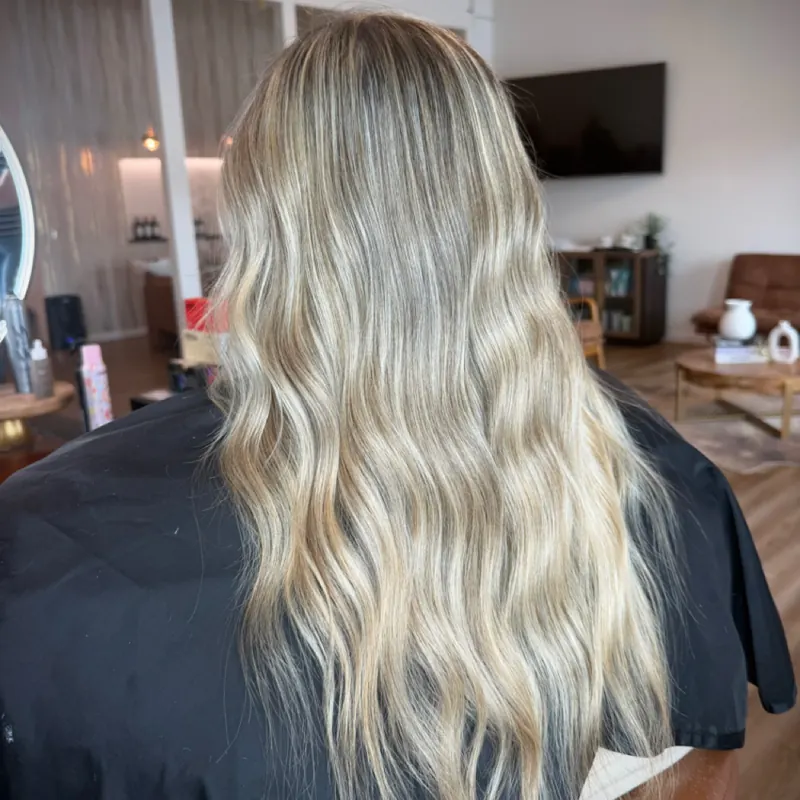
The best extensions for fine or thin hair are the ones that add a light, well-spread amount of hair without straining your own strands. That often means fewer or thinner wefts, careful placement and a regular maintenance schedule. A consultation is the most reliable way to find out how much your hair can comfortably support.
Fine hair and thin hair aren't the same thing, and the difference matters when you're choosing extensions. Fine describes each strand: it's small in diameter. Thin describes density: there are fewer strands per square inch. You can have fine hair that's dense, or coarse hair that's thin, or both fine and thin. Each combination handles extensions a little differently.
The goal is always the same, though. Extensions for fine or thin hair should add fullness that looks like yours, sit comfortably and leave your natural hair in good shape when they come out.
Can you get extensions if your hair is fine or thin?
For many people, yes. Fine and thin hair is one of the most common reasons people look into extensions in the first place. The key is matching the method and the amount of hair to what your own hair can support.
Your artist will look at a few things at the consultation:
- Density at the crown and sides. There needs to be enough of your own hair to cover the attachment points.
- Strand strength. Fragile, over-processed or breaking hair may need care before any install.
- Scalp comfort. Some people are more sensitive to tension than others.
- Your goal. Adding length to thin ends is a different job than adding volume all over.
If your hair is recovering from damage, your artist may suggest a smaller install or a few months of treatment and trims first. That isn't a no. It's a plan to protect the hair you have.
Which methods tend to work well for fine hair?
There's no single answer, but here's how the common methods generally compare for fine or thin hair. For a full overview, see types of hair extensions, explained.
Sew-in (beaded-row) extensions
This is the method Cody & Co. lists. A row of small beads creates a base close to the scalp, and wefts are sewn to it, with no glue or heat. For fine hair, the advantages are that the weight is supported by a secure row rather than a handful of tiny bonds, and your artist can choose how much hair to put on that row.
The trade-off is that a row needs enough of your own hair above it to hide it. That's why fine-haired guests often do well with a single row, or a lighter weft, placed thoughtfully. Kayden lists a new install from $125 for the install service, with additional rows $50 each and extension hair priced separately.
Hand-tied wefts
Hand-tied wefts are very thin and flexible, which can help them lie flat on fine hair. They're usually sewn onto a beaded row, like a sew-in. They aren't listed as a separate service at the salon, so ask the extension artists if you're curious.
Tape-ins
Tape-ins spread weight across many small sections and sit flat, which is why they're often suggested for fine hair. The adhesive can be loosened by oils and heavier products, and removal uses a solvent. Tape-ins aren't on the salon's service list.
Keratin-bond (k-tip) and i-tip extensions
Strand-by-strand methods can be customized very precisely, but each bond or bead holds weight on a tiny section of hair, so placement and sizing are critical with fine hair. These aren't listed services at Cody & Co.
Clip-ins and halos
For occasional fullness, a halo puts no tension on your hair at all, and clip-ins come out at night. They're a gentle way to test how you feel about extra hair before committing to anything semi-permanent.
How much hair is too much?
This is the most important question for fine or thin hair, and it doesn't have a universal number. A general rule many stylists follow: the extensions shouldn't outweigh what your own hair can comfortably carry.
Signs an install is too heavy for your hair:
- a constant pulling or aching feeling at the scalp after the first few days
- visible tension or small bumps around the attachment points
- more shedding than usual at the row or bonds
- the row or bonds showing through because there isn't enough hair to cover them
If you notice any of these, call your artist rather than waiting for your next appointment. For scalp concerns that feel medical, such as persistent soreness or patchy hair loss, see a dermatologist.
What length works best with fine hair?
Very long extensions on fine hair can look stringy at the ends and add more weight. Many people with fine hair get a more natural result from moderate length, enough to add fullness through the mid-lengths and ends without a dramatic jump. A blending cut ties everything together so your own hair and the extensions finish at the same place.
Caring for extensions on fine hair
Fine hair tangles and breaks more easily, so home care carries more weight:
- Brush from the ends up with a soft or loop brush, holding the row or root area to take tension off.
- Keep conditioner and oils away from the attachment area.
- Dry the row fully after washing so it doesn't stay damp against the scalp.
- Sleep in a loose braid to cut down on tangling.
- Keep move-ups on schedule. Kayden recommends an express move-up every 6-8 weeks. Overgrown rows put more stress on fine hair.
More detail is in are hair extensions damaging?.
Booking in Athens
Kayden offers extension consultations at no charge, which is the right first step for fine or thin hair. Christina Morgan also lists extensions as a specialty. Guests come from across East Tennessee, including Knoxville, about an hour up I-75.
Read more about the hair extensions service, or go straight to Kayden Coile's booking. Each artist's booking page shows current prices.
Common questions
Are extensions bad for fine hair?
Not necessarily. Problems usually come from too much weight, skipped maintenance or rough removal. A lighter install that's matched to your hair and kept up on schedule is gentler.
What's the difference between fine hair and thin hair?
Fine refers to the width of each strand. Thin refers to how many strands you have. Many people have both, and your artist will plan an install around each.
How many rows of extensions do I need for thin hair?
It depends on your density and your goal. Many people with thin hair start with one row and add more only if the hair can support it, and your artist will recommend an amount at the consultation.
Can extensions make thin hair look thicker?
Yes, for many people that's the main reason to get them. Color matching and a blending cut are what make the added fullness look like your own hair.